


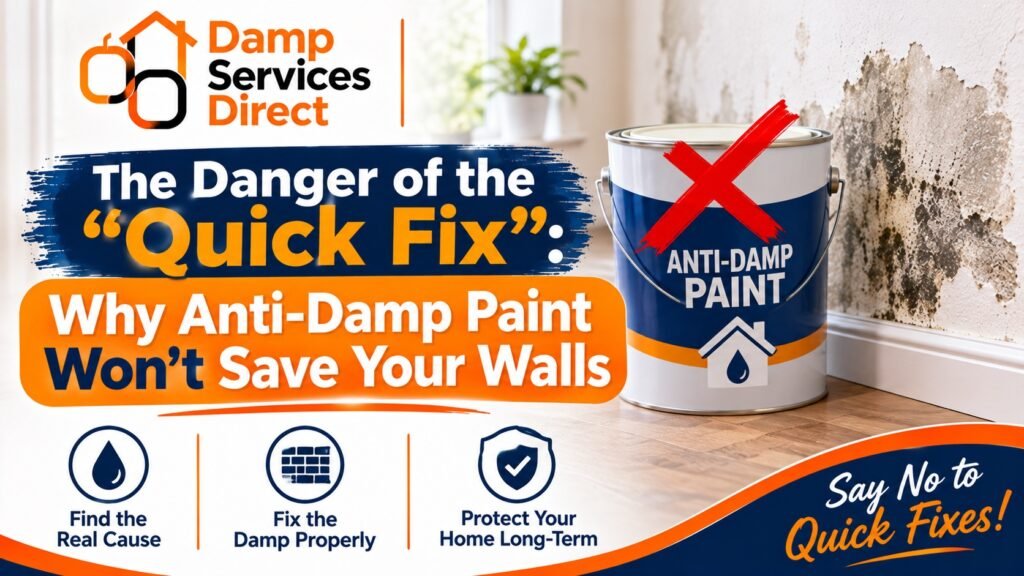
No, anti-damp paint does not cure damp. It can hide a stain for a few weeks, but it does not stop water getting into the wall. Moisture can build up behind the paint until it bubbles, blisters and flakes, and trapped moisture can encourage timber rot and mould. The lasting fix is to find the true cause first, whether that is condensation, rising damp, penetrating damp or a leak, then treat it and redecorate once the wall has dried.
You are rearranging a room or tidying up for visitors when you spot it: a faint musty smell, a slightly peeling corner of wallpaper, or a dark, patchy shadow creeping up from the skirting board.
The instinct is to nip to the DIY shop, grab a tin of specialist damp-sealing or anti-condensation paint and brush over it. It looks clean, the stain disappears and you can cross it off the weekend to-do list. Problem solved?
Unfortunately not. As a family-run team that has been diagnosing property moisture across Swindon and surrounding villages since 2007, we often see the aftermath of this quick fix. Painting over an active moisture problem is a bit like covering a warning light on your dashboard. The cosmetic issue disappears for a few weeks, but underneath, the damage can keep getting worse and more expensive.
Why Anti-Damp Paint Fails
Damp is never a problem in its own right. It is a symptom of water being somewhere it should not be. Anti-damp paints act as a surface barrier, so they cannot stop water that is coming from elsewhere. Instead, the water collects behind the paint film and builds up pressure until the new paint bubbles, blisters and flakes off.
The table below shows the three common culprits and why paint cannot deal with them:
| Cause | What is happening | Why paint will not solve it |
| Condensation | Warm, moist air meets cold wall surfaces, often because of poor ventilation. | Paint does not change the humidity or airflow that produces the moisture. |
| Rising damp | Ground water is drawn up through porous brickwork, for example when a damp-proof course has been bridged or has failed. | Water keeps moving up the wall and collects behind the paint. |
| Penetrating damp and leaks | Water gets in through external defects such as a cracked gutter or damaged roof tile, or escapes from a hidden pipe. | The source keeps supplying water, whatever is on the surface. |
Not sure which one you have? Our guide to the real cause of moisture in your home explains the differences. You can also read about our approach to rising damp and leak detection.
Can Anti-Damp Paint Make Things Worse?
It Can Contribute to Timber Rot
Sealing a damp wall with a non-breathable coating can trap moisture inside the building fabric. If that moisture reaches timber such as floor joists or wall plates, it can create the conditions for wet rot or dry rot. Dry rot is an aggressive fungus that can spread through masonry and feed on structural timber, so a small patch of damp paint can turn into a much bigger restoration job. Find out more about wet rot and dry rot.
Mould Can Keep Growing Out of Sight
Some anti-damp paints claim anti-microbial properties, but if moisture remains behind the plaster, mould can continue to grow where you cannot see it, behind wallpaper, skirting boards or inside wall cavities. That can affect indoor air quality. If mould keeps returning, our mould control service looks at why the area stays damp.
Signs That the Paint Is Not Working
- Bubbling, blistering or flaking paint on the treated area.
- Stains or tide-marks reappearing through the new paint.
- A musty smell that returns after decorating.
- Dark spots appearing around the edges of the painted patch, or on nearby walls.
If you notice any of these, stop repainting. It is a clear sign that the cause has not been dealt with.
What to Do Instead of Painting Over Damp
- Do not paint, seal or fill the area. Leave it as it is so the cause can be identified.
- Note the symptoms. Take dated photos and record where and when the damp appears and whether it changes with the weather.
- Reduce moisture in the meantime. Ventilate when cooking and showering. Our five simple ways to prevent damp this season has practical ideas.
- Get a proper diagnosis. See how to prepare for your professional damp survey.
- Treat the cause, then redecorate. Once the source is fixed and the wall has dried, you can decorate. Ask your surveyor what finish suits the wall.
How Professionals Find the Real Cause Without Tearing Your Home Apart
Before recommending any treatment, we use advanced, non-destructive diagnostic equipment to find out where the moisture originates. We do not simply recommend invasive work that is not needed.
- Thermal imaging cameras map the temperature profile of walls, helping to reveal hidden leaks or cold spots where condensation forms. See how thermal imaging helps tell damp from an invisible leak.
- Acoustic leak detection listens for the sound of escaping water in pipework within walls and floors, so leaks can be located without unnecessary digging.
- Moisture mapping measures moisture and humidity in the plaster to show whether a damp patch is historic or currently active.
For a fuller explanation, read how to find the source of damp. Once the root cause is mapped, the solution might be a targeted ventilation upgrade for condensation, a specialist rising damp treatment or wider damp proofing work.
Protect Your Biggest Asset
Your home is likely your most significant financial investment. A tin of DIY sealer can hide a problem that becomes far more costly to fix later. We look at the wider picture in the hidden cost of DIY damp proofing and why ignoring mild damp today can cost you more tomorrow.
As a trusted, local, family-run business, we pride ourselves on transparent, honest advice and professional workmanship.
Frequently Asked Questions About Anti-Damp Paint
Does anti-damp paint work?
Not as a cure. It may hide a stain for a short time, but it does not stop the moisture source, so the problem is likely to return and the paint may bubble or flake.
Can I paint over damp?
It is best not to. Painting over an active moisture problem hides evidence and does not fix the cause. Get the source diagnosed and treated first.
Why is paint bubbling on my wall?
Bubbling or blistering often means moisture is collecting behind the paint film. Causes include rising damp, penetrating damp, a leak or condensation. A survey can identify which.
Does anti-condensation paint stop condensation?
Condensation is caused by humidity and poor ventilation, and paint does not change either. Reducing moisture in the air and improving airflow is usually part of the solution.
When can I repaint after damp has been treated?
Once the cause has been fixed and the wall has dried, you can redecorate. Ask your surveyor or contractor what finish is suitable for the wall.
Do you offer free survey estimates?
Yes. We offer free, no-obligation survey estimates. Get in touch with details of your problem. More answers are on our FAQs page.
Think You Have a Damp Problem?
Do not wait for it to get expensive. Contact Damp Shop Services for a free, no-obligation survey estimate and definitive answers from a local team. Call 01793 238738, or email sales@dampshop-services.co.uk.
Damp Shop Services, 18 Church Walk North, Swindon SN25 3DJ.