

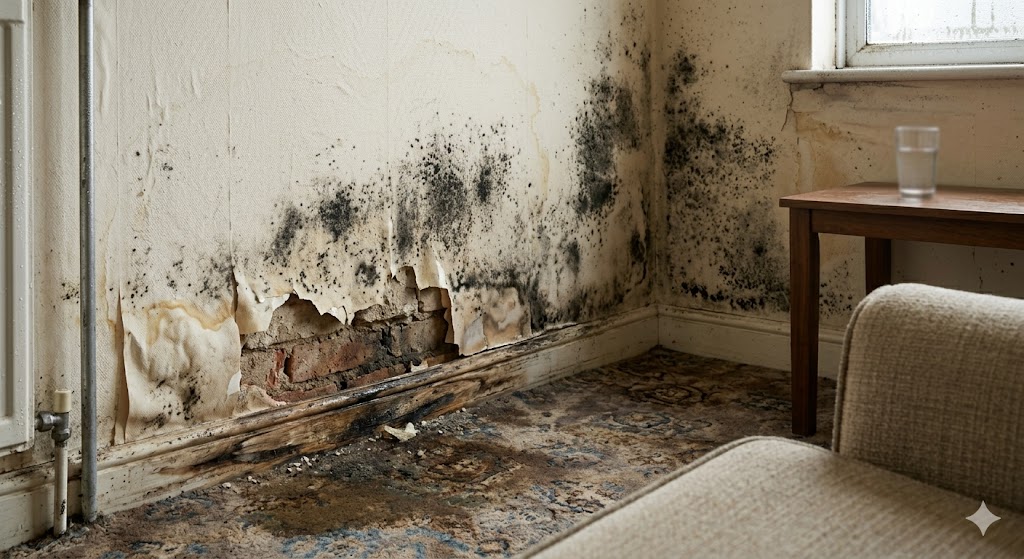
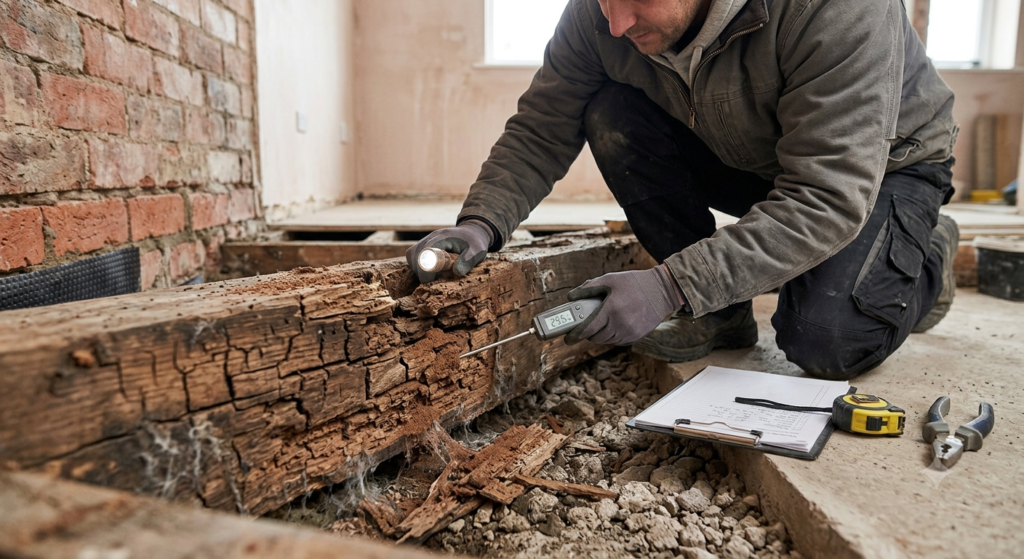
When moisture penetrates timber joists, flooring, or skirting boards, it creates an environment where wood-destroying fungi thrive. While both wet rot and dry rot feed on the cellulose in structural timber, understanding the differences between the two can save you thousands of pounds in unnecessary repairs.
At DampShop Services, our team provides comprehensive timber treatments and damp solutions across Swindon and the surrounding areas. Here is what every property owner needs to know about identifying and treating timber rot before structural damage sets in.
1. What Is Wet Rot?
Wet rot (Coniophora puteana) is the most common form of decay found in UK properties. It requires a relatively high moisture content (around 40–50%) to take hold, meaning it typically occurs in areas directly exposed to localized dampness or water leaks.
Key Identification Signs:
-
Darkened, Softened Wood: Timbers feel spongy or soft when pressed with a sharp screwdriver.
-
Localized Damage: The rot stays confined strictly to the damp area and will not spread to dry wood.
-
Paint Cracking: Paint finishes on window frames or doors may look intact from the outside, but crumble when touched.
Common Causes: Leaking roof tiles, blocked gutters, leaking plumbing, or floorboards coming into contact with damp masonry.
2. What Is Dry Rot?
Dry rot (Serpula lacrymans) is far more destructive because it can spread beyond the original damp source. The fungal strands (hyphae) can travel through brickwork and masonry to reach sound timber, destroying healthy wood along the way.
Key Identification Signs:
-
Deep Cubical Cracking: Wood splits across the grain, creating distinct cube-shaped fractures.
-
White or Grey Mycelium: A cotton-wool-like growth that spreads over brickwork and timber surfaces.
-
Fruiting Bodies: Rusty-red, mushroom-like brackets that drop spores as fine reddish-brown dust.
-
Musty Mushroom Smell: A strong, earthy odour that persists even in well-ventilated areas.
Crucial Difference: Wet rot requires continuous moisture to survive and remains isolated. Dry rot can transport moisture through masonry to destroy dry, uninfected timber across entire floor networks.
3. How We Treat Timber Decay
Treating rot requires far more than replacing a few floorboards; the root cause of moisture must be completely eliminated to prevent recurrence.
┌─────────────────────────────────────────┐
│         Step 1: Locate Moisture         │
│  (Fix leaks, damp issues, or ventilation)│
└────────────────────┬────────────────────┘
                     │
                     ▼
┌─────────────────────────────────────────┐
│        Step 2: Remove Infested Wood     │
│   (Cut back decayed timber safely)      │
└────────────────────┬────────────────────┘
                     │
                     ▼
┌─────────────────────────────────────────┐
│       Step 3: Specialist Fungicide      │
│  (Treat surrounding timbers & masonry)  │
└────────────────────┬────────────────────┘
                     │
                     ▼
┌─────────────────────────────────────────┐
│      Step 4: Structural Restoration     │
│  (Install pre-treated timbers & joists) │
└─────────────────────────────────────────┘
-
Moisture Source Identification: We identify and resolve the underlying leak, condensation issue, or rising damp problem.
-
Removal of Affected Wood: Decay-damaged structural timbers are removed carefully.
-
Fungicidal Treatment: Surrounding brickwork and sound timber are treated with professional-grade fungicidal applications to eliminate remaining spores.
-
Timber Replacement: We replace damaged floor joists, floorboards, or wall plates with pre-treated timber to protect your property’s structural integrity.
Protect Your Property with Local Experts
If you suspect timber rot in your floors, roof space, or skirting boards, don’t wait for the damage to spread. DampShop Services offers full property inspections, transparent advice, and guaranteed treatments across Swindon and nearby villages.
-
Call us directly: 07738 572899 / 01793 238738
-
Email: sales@dampshop-services.co.uk
-
Website: dampshop-services.co.uk