


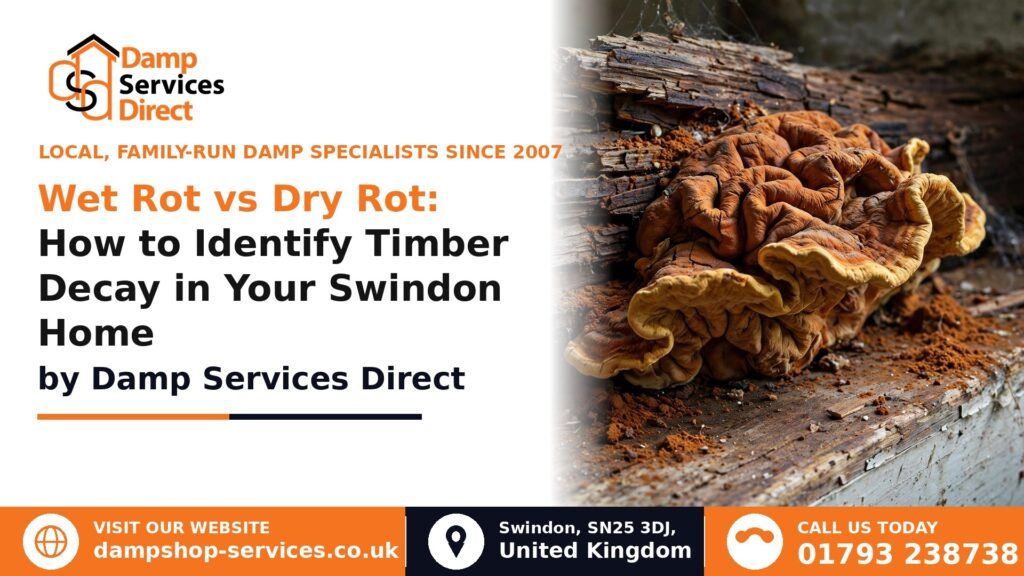
Wet rot stays close to the damp area and leaves timber dark, soft and spongy, while dry rot can spread through masonry and shows cube shaped cracks, grey strands and red spore dust. At DampShop Services, we offer wet rot vs dry rot Swindon surveys and timber treatment for homes and businesses across Swindon and nearby villages, so you know exactly which type you have and how to put it right.
Why Telling Them Apart Matters
Both types of fungal decay feed on the cellulose in timber when moisture is present, so they can look alike at first glance. The difference shows in how far each one spreads, which decides how much timber needs attention and how soon to act. Identifying the type early keeps repairs focused and your costs sensible.
What Is Wet Rot?
Wet rot is the most common form of timber decay in UK homes. The cellar fungus (Coniophora puteana) is a frequent species. It needs a high moisture level in the wood, so it appears where timber stays wet, such as near a leak, a blocked gutter or damp masonry.
Key Signs of Wet Rot
- Dark, soft or spongy timber when pressed gently with a screwdriver
- Decay that stays inside the damp area
- Paint that looks fine on the surface yet crumbles when touched
- Cracked or crumbly wood along the grain
- A musty smell near the affected area
Common Causes
- Leaking roof tiles, flashings and gutters
- Leaking pipes, baths and sinks
- Floorboards and joists touching damp masonry
- Window frames and doors with worn paint or seals
What Is Dry Rot?
Dry rot (Serpula lacrymans) is a more serious form of decay because it can spread beyond the original damp spot. Its fungal strands, called hyphae, can travel through brickwork, plaster and masonry to reach sound timber elsewhere in the property.
Key Signs of Dry Rot
- Deep cube shaped cracks across the grain
- White or grey cotton wool like growth over timber and brickwork
- Rust coloured, mushroom like fruiting bodies
- Fine red brown spore dust on nearby surfaces
- A strong mushroom smell that lingers even with fresh air
Common Causes
Dry rot often begins in hidden, poorly ventilated places such as under floors, behind panelling and in cellars, where a small amount of moisture builds up over time.
Wet Rot vs Dry Rot at a Glance
| Feature | Wet Rot | Dry Rot |
|---|---|---|
| Moisture needed | High and constant | Lower, then spreads moisture through strands |
| Spread | Stays in the damp area | Travels through masonry and timber |
| Timber look | Dark, soft and spongy | Cube shaped cracks, grey strands |
| Surface growth | Rare | White or grey cotton wool like growth |
| Spore dust | Not typical | Red brown dust |
| Smell | Musty | Strong mushroom scent |
| Urgency | Fix the damp source, then repair | Book a specialist survey promptly |
Is It Woodworm Instead?
Small round exit holes with fine dust point to wood boring beetles, not fungal decay. The two can occur together in damp timber, so a timber survey checks for both.
A Simple Home Check
- Press suspect timber gently with a screwdriver and note any soft areas.
- Look under sinks, baths and floorboards where you can reach them safely.
- Check window sills, door frames and skirting boards for dark or crumbly patches.
- Inspect lofts and roof edges for stained timber after rain.
- Take photos and note any smell, then book a survey for a clear answer.
How We Treat Timber Decay
Replacing a few floorboards is not enough on its own. The moisture source must be fixed so decay does not return. Our process follows four steps:
- Locate and fix the moisture source. We trace and resolve the leak, condensation, rising damp or ventilation issue using moisture meters and thermal imaging.
- Remove affected timber. We cut back decayed wood safely, and for dry rot we extend the work beyond the visible area.
- Apply specialist fungicide. Surrounding brickwork and sound timber receive professional treatment to protect against remaining spores.
- Restore the structure. We install pre treated joists, floorboards and wall plates to bring strength back to your property.
Explore our full wet rot and dry rot service, and see how each moisture source is handled through our leak detection service, rising damp treatment, condensation control service and property drying service.
Keep Timber Healthy Long Term
- Clear gutters and downpipes each autumn
- Keep air bricks free so floors can breathe
- Repair leaks promptly and dry wet areas
- Repaint and reseal external window frames and doors
- Arrange a damp and timber survey every few years in older properties
Helpful Reading
For more background, see the RICS Property Journal feature on wood boring insects and damp timber, the Swindon Link report on wet and dry rot in UK homes and the Which? guide to what kind of damp is affecting your home. You may also enjoy our guides on hidden damp and timber decay and the early signs of damp. Buying a property? A pre purchase damp survey highlights timber concerns before you commit.
Wet Rot vs Dry Rot Swindon and Surrounding Areas
We provide wet rot vs dry rot Swindon surveys and treatment for homeowners, landlords, tenants and buyers in Swindon, Royal Wootton Bassett, Highworth, Cricklade, Marlborough, Faringdon, Cirencester, Calne, Malmesbury, Chippenham, Wantage and Devizes.
Frequently Asked Questions
What is the main difference between wet rot and dry rot?
Wet rot stays within the damp area, while dry rot can spread through masonry and timber to reach wood some distance away.
How can I tell if I have dry rot?
Look for deep cube shaped cracks, grey or white strands, rust coloured fruiting bodies, red brown spore dust and a strong mushroom smell. A survey confirms the diagnosis.
Can wet rot turn into dry rot?
They are different fungi, yet both begin with excess moisture. Fixing the moisture source early helps prevent either type from developing.
Do I need to replace all the affected timber?
Often only the decayed sections need replacing. Wet rot is usually limited to the damp zone, and dry rot treatment extends beyond the visible area. A survey shows the exact extent.
What causes timber decay in Swindon homes?
Typical causes are leaks, blocked gutters, rising damp, poor ventilation and ongoing condensation.
How soon should I book a survey?
As soon as you notice soft timber, strange growth or a persistent musty smell.
Book Your Timber Survey Today
Ready for clear answers? Call us on 01793 238738, email sales@dampshop-services.co.uk or visit us at 18 Church Walk North, Swindon SN25 3DJ. You can also use our contact page to request a free estimate.