

As a homeowner, it’s easy to overlook minor changes around the house. A slightly peeling corner of wallpaper here, a musty smell in the spare room there—we often chalk them up to “old house character” or a seasonal transition.
However, moisture problems in your property rarely stay small. What starts as a faint patch of discoloration can rapidly evolve into structural timber decay, toxic mould growth, or extensive rot.
If you live in Swindon or the surrounding villages, keeping an eye out for these three warning signs can save you thousands of pounds in long-term repairs.
1. Flaking Paint, Peeling Wallpaper, or “Salty” Walls
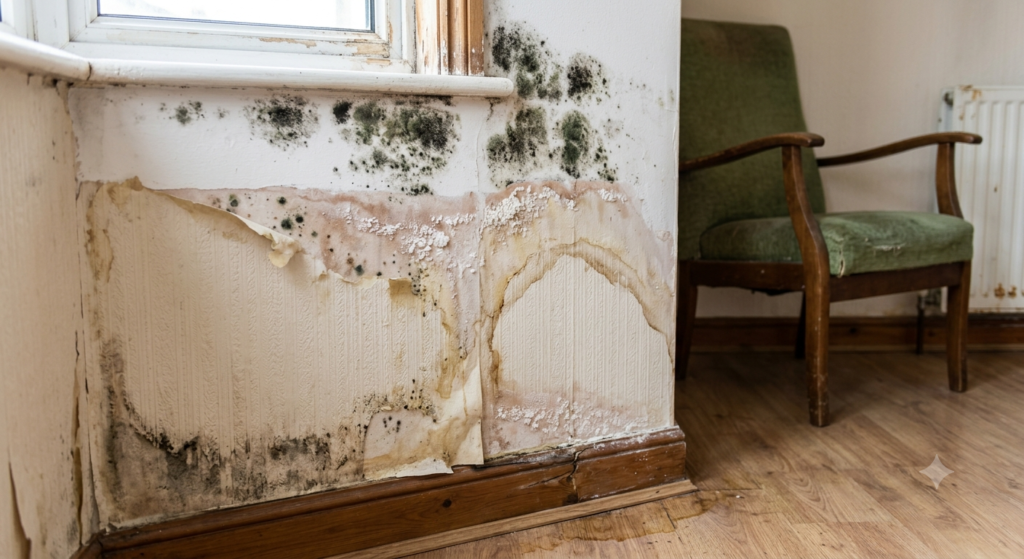
If your paint is beginning to bubble and flake away, or your wallpaper is starting to peel away from the skirting boards, your walls are actively trying to tell you they are wet.
This is frequently caused by rising damp—where moisture from the ground is drawn up through your bricks via capillary action (similar to a sponge)—or penetrating damp caused by external leaks. As the water evaporates into your room, it leaves behind ground salts that crystallise on the plaster. These salts look like a white, powdery residue and actively draw more moisture from the air, making the problem progressively worse.
2. Black Mould Speckles on Walls and Ceilings
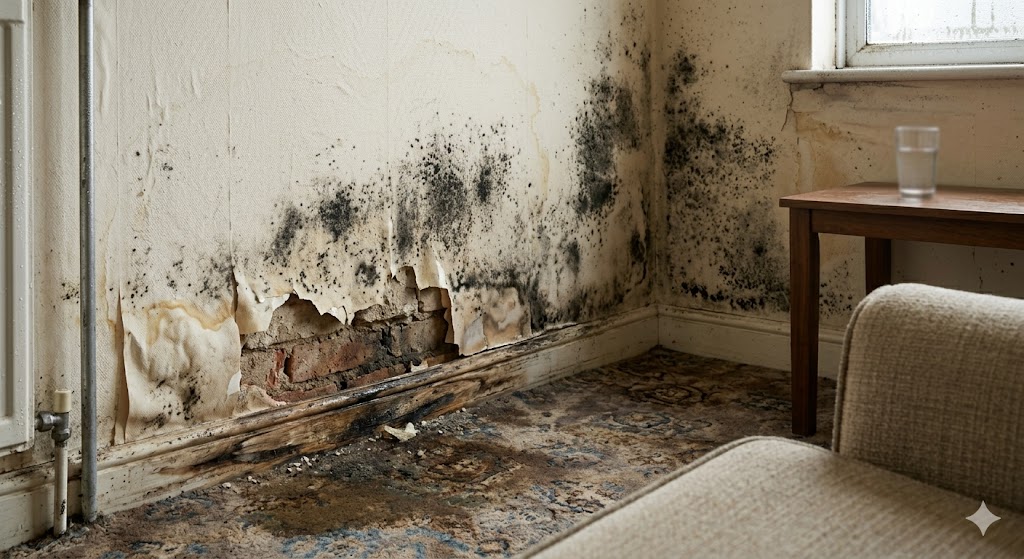
Mould is more than just an unsightly blemish; it is a direct hazard to your family’s respiratory health. If you notice black speckles forming around window frames, behind furniture, or on your bathroom ceiling, you likely have a condensation or ventilation issue.
When warm, humid air from cooking, showering, or drying clothes meets cold walls, it turns back into liquid water. Without adequate air extraction or professional mould control treatments, this constant moisture becomes the perfect breeding ground for toxic spores.
3. Spongy Floorboards or a Persistent Musty Odour
Does a room in your house constantly smell like a damp forest floor, even after you open the windows? This distinctive, earthy odour is the byproduct of active fungal growth.
If your floorboards feel slightly springy or spongy when you walk on them, moisture has likely penetrated your subfloor timbers. This environment can lead to wet rot or the even more destructive dry rot (which can spread rapidly through masonry to destroy timber throughout your home). Identifying the water source early is critical to saving the structural integrity of your floors.
The Root Cause: Why DIY Patches Fail
It’s tempting to buy a tin of “anti-damp” paint or scrub the mould away with bleach. However, these are temporary cosmetic fixes. Unless you identify and resolve the exact route of water entry, the damp will return.
Whether the culprit is a failed damp proof course (DPC), a hidden plumbing leak, or poor subfloor ventilation, you need to find the source. This is where professional leak detection and damp surveys pay for themselves.
Protect Your Swindon Home Today
Since 2007, the family-run team at Damp Services Direct has been protecting homes across Swindon and the surrounding areas. We don’t believe in guesswork. We use advanced diagnostic equipment to find exactly where the moisture is coming from and provide long-lasting, guaranteed solutions.
Don’t wait for a small patch of damp to become a major structural problem.
-
Call our local team directly: 07738 572899 / 01793 238738
-
Email us for advice: sales@dampshop-services.co.uk
-
Or visit DampShop Services to book your professional site survey today.