

Whether you live in a characterful Victorian terrace in Old Town or a modern family home in North Swindon, moisture is one of the most destructive threats your property can face.
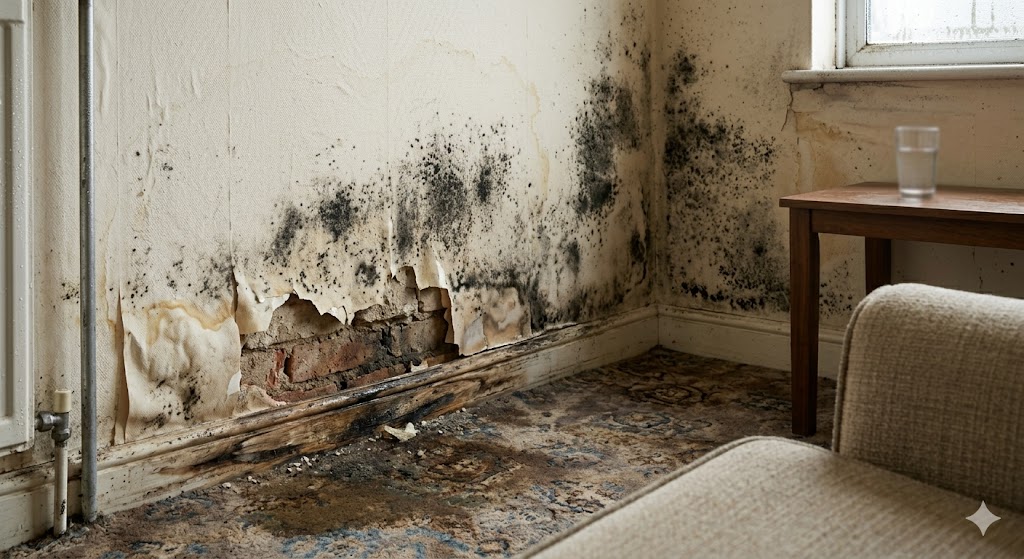
Peeling wallpaper, crumbling plaster, and persistent black mould are all warning signs that water is trapped inside your structure. However, treating damp successfully requires an accurate diagnosis. Treating condensation like rising damp—or ignoring a hidden pipe leak—wastes time and money while the underlying damage worsens.
At DampShop Services, our family-run team uses advanced diagnostic technology to locate the true root cause of moisture issues. Here is how to recognize the three most common moisture problems affecting homes across Wiltshire.
1. Rising Damp: The Ground-Level Moisture Threat
Rising damp occurs when moisture from the soil travels upward through the porous brickwork and mortar of your walls via capillary action. It usually affects ground-floor rooms and basement spaces.
Common Warning Signs:
-
Tide Marks: Horizontal tide lines or damp patches extending up to 1 metre high above the floorboards.
-
Hygroscopic Salt Deposits: White, powdery salts or bubbling paint bleeding through internal plaster.
-
Timber Decay: Rotting skirting boards or floor joists at the base of the wall.
How We Fix It:
We install professional, long-lasting Damp Proof Courses (DPC) and moisture barriers to block groundwater movement, followed by specialist salt-retardant replastering to restore your walls.
2. Condensation & Mould: The Indoor Moisture Trap
Not all damp comes from the ground. If you notice black mould around window frames, water streaming down glass in the morning, or damp patches in kitchens and bathrooms, condensation is the primary culprit.
Modern insulation seals heat inside, but without controlled air circulation, daily moisture from cooking, bathing, and drying clothes becomes trapped. Cold spots on walls attract this airborne water, creating the ideal breeding ground for toxic black mould.
How We Fix It:
We combine professional mould remediation with permanent ventilation upgrades—such as installing Positive Input Ventilation (PIV) systems—to continuously filter fresh air into the home and eliminate high indoor humidity.
3. Hidden Water Leaks: The Invisible Cause of Sudden Damp
Sometimes a persistent wet patch on a wall or a sudden mould outbreak isn’t structural damp at all—it’s a hidden plumbing leak behind dry lining or beneath floor screed.
A tiny pinhole leak in a central heating pipe can cause boiler pressure to drop repeatedly while releasing water along joists and walls, mimicking penetrating or rising damp.
How We Pinpoint Invisible Leaks:
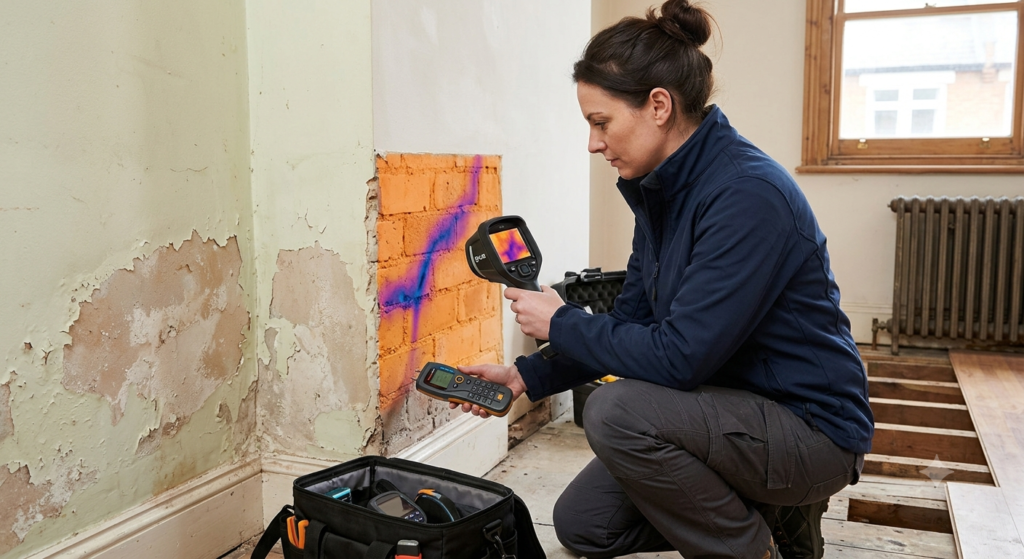
Rather than tearing away plaster or ripping up flooring to guess where the water is coming from, DampShop Services uses non-destructive leak detection technology:
-
FLIR Thermal Imaging: Maps microscopic temperature changes to reveal hidden water pathways.
-
Acoustic Leak Detection: Listens for the minute sound frequencies emitted by pressurized escaping water.
-
Tracer Gas Testing: Safe, non-toxic gas tracing to identify pinhole leaks under concrete floors.
Why Choose DampShop Services?
With over two decades of local trade experience, we offer Swindon homeowners a full-service approach under one roof:
-
Approved Specialist: Certified contractors for Wykamol, Permaguard, and Triton Chemicals damp and timber solutions.
-
Fair, Transparent Quotes: Honest advice with clear, competitive pricing and zero hidden fees.
-
Guaranteed Workmanship: Backed by comprehensive long-term guarantees and £2,000,000 public liability insurance.
Protect Your Property Today
Don’t let minor moisture issues turn into costly structural repairs. Contact our friendly local team for expert guidance or a free estimate.
-
Call direct / 24/7: 01793 238738 | 07738 572899
-
Website: dampshop-services.co.uk