


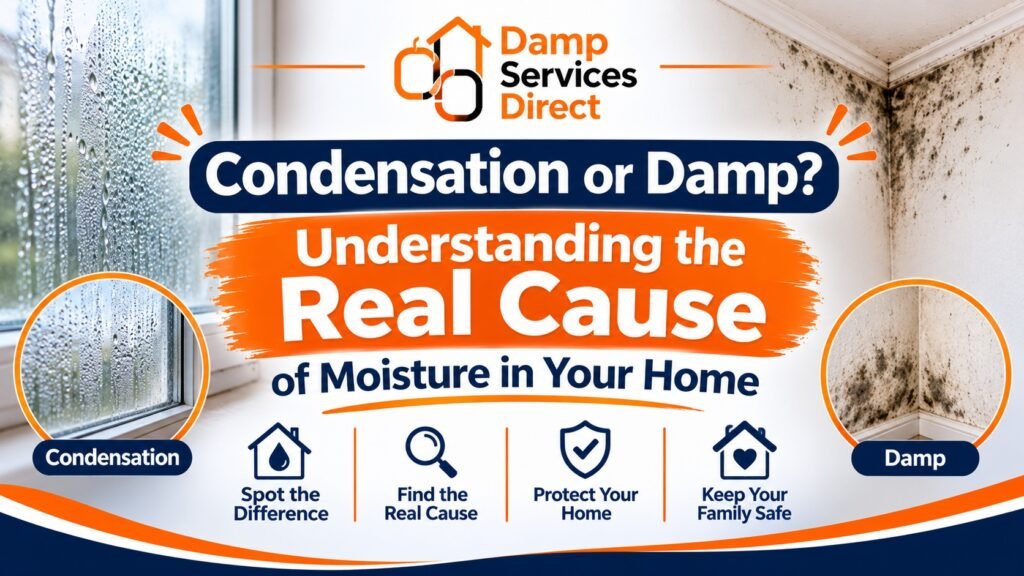
Condensation happens when warm, moist air meets a cold surface. It shows up as droplets on windows, black spot mould in corners or behind furniture, and musty wardrobes, and it is usually linked to everyday habits and poor ventilation. Structural damp such as rising or penetrating damp tends to leave marks low down on walls or after rain, and it does not simply wipe away. If you cannot tell which you have, get the cause diagnosed before you spend money on treatments.
Water running down the windows or black spots creeping into a corner can be alarming, and many homeowners assume the worst: rising damp. In fact, a significant number of moisture problems are caused by condensation, which is largely down to how a building is used and ventilated.
The distinction matters. Misidentifying the problem can mean spending time and money on unnecessary chemical treatments when the real solution lies in managing airflow and humidity. This guide explains how to tell condensation from damp, what causes it, and when it is time to call in a professional.
Condensation or Damp: What Is the Difference?
Condensation is a surface problem caused by moisture in the air. Warm, humid air inside your home touches a cold surface, such as a window or a north-facing wall, and turns into water droplets.
Damp usually refers to moisture getting into the building fabric itself. It might rise from the ground (rising damp), enter through the roof or walls (penetrating damp), or come from a leaking pipe. These problems need a different fix from condensation, which is why an accurate diagnosis comes first.
Signs of Condensation in Your Home
Condensation tends to leave a recognisable pattern. Look out for:
- Water droplets or “fogging” on window panes, especially in the morning.
- Black spot mould in the corners of rooms, or behind furniture where air circulation is poor.
- Musty smells and mildew in wardrobes and cupboards.
- Moisture on cold external walls that often appears and disappears with the weather and your daily routine.
If you are noticing several of these signs, our guide to three signs of damp you should not ignore is a useful next read.
How to Tell Condensation From Other Types of Damp
Every home is different, but these general patterns can help you narrow things down:
| Type | Typical signs | Where it tends to appear | When it tends to appear |
| Condensation | Droplets on glass, black spot mould, musty cupboards. Surface moisture often wipes away. | Windows, room corners, behind furniture, cold or north-facing external walls. | Often worse in colder months and after cooking, showering or drying laundry indoors. |
| Rising damp | Tide-marks, peeling paint or plaster, salty deposits. | Low down on ground-floor walls. | Fairly constant. Does not clear up with better ventilation. |
| Penetrating damp | Damp patches that may darken or spread. | Walls, ceilings or chimney breasts, often near roofs, gutters or defective external walls. | Often appears or worsens after heavy rain. |
| Plumbing leak | Stains or damp patches that do not match the weather. | Near pipes, radiators, baths and sinks, or the rooms below them. | Can appear at any time and tends to persist. |
These are general patterns, not a diagnosis, and a property can have more than one problem at once. For a deeper comparison, read our article on how to spot the difference between rising damp, condensation and hidden leaks.
What Causes Condensation in the Home?
Because condensation is linked to lifestyle factors, the causes are often found in everyday routines:
- Cooking and showering release a lot of moisture into the air, especially without extractor fans or open windows.
- Drying clothes indoors on radiators or airers adds moisture to rooms that may already be poorly ventilated.
- Poor ventilation traps humid air. Well-sealed modern homes can be affected as much as older properties if air has nowhere to go.
- Cold surfaces such as single-glazed windows or poorly insulated walls give moist air somewhere to condense.
- Furniture pushed against external walls restricts airflow and creates damp pockets where mould can take hold.
Our guide to five simple ways to prevent damp this season covers more everyday habits that make a difference as the colder months set in.
A Simple Check You Can Try at Home
Here is a rough guide often used to get a first impression. Tape a piece of kitchen foil firmly to the affected wall and leave it for a day or two.
- If moisture appears on the outside of the foil, the cause is likely to be condensation from the room air.
- If moisture appears underneath the foil, the dampness is more likely to be coming from within the wall.
This is only a starting point. It cannot rule out a hidden leak or tell you the exact source, so treat it as a clue rather than an answer.
Why Quick Fixes Often Fail
Many homeowners try anti-damp paint or store-bought sprays first. These may hide the marks for a while, but they do not tackle the cause of the moisture. Treating condensation as if it were a structural problem, or the other way round, means the moisture will inevitably return. We explain why in the danger of the quick fix and why anti-damp paint will not save your walls.
How to Reduce Condensation
If your symptoms point to condensation, these practical steps can help lower moisture levels:
- Use extractor fans or open a window when cooking and showering, and keep bathroom and kitchen doors closed so steam does not spread.
- Put lids on pans and avoid leaving kettles boiling.
- Dry washing outdoors where possible, or in a room with a window open or an extractor running.
- Leave a small gap between furniture and external walls.
- Wipe windows and sills dry in the morning, and keep heating on a steady, moderate level rather than short bursts.
- Clean any black spot mould promptly with a suitable mould cleaner, and ventilate the room while you do.
If the problem keeps returning, or the mould is widespread, our mould control service can help, and our condensation page explains how we approach long-term humidity problems.
When It Might Be More Than Condensation
Consider getting a professional opinion if you notice any of the following:
- Tide-marks, salty deposits or crumbling plaster low down on walls, which can point to rising damp.
- Damp patches that appear after rain, or that do not change with ventilation or heating.
- Moisture near pipes or radiators, or a patch that keeps growing, which may suggest a leak. Our leak detection service is designed to trace hidden problems.
- Soft, crumbling or discoloured timber, which may indicate wet rot or dry rot.
How Damp Shop Services Finds the Real Cause
Because condensation is so often tied to how a home is used, the solution needs a nuanced approach rather than a standard product application. With Damp Shop Services you can expect:
- Professional diagnostic technology. We use thermal imaging to pinpoint cold spots and assess the thermal efficiency of your walls. Find out more in our article on how thermal imaging helps tell damp from an invisible leak.
- Targeted advice. We recommend practical, long-term solutions, such as improving mechanical ventilation, to reduce humidity levels effectively.
- Protection against further damage. Addressing condensation early helps prevent the long-term impact of mould and rot on your building’s timber and plaster.
Booking a survey? Our guide on how to prepare for your professional damp survey will help you get the most from the visit.
Do Not Guess: Get the Facts
Condensation and damp are both progressive problems. The longer the true cause goes unidentified, the greater the potential harm to your property’s condition and value, and to your indoor air quality. A clear diagnosis lets you spend only on what your home actually needs.
Frequently Asked Questions About Condensation and Damp
Is condensation the same as damp?
Not exactly. Condensation forms when moist indoor air meets a cold surface, while damp usually means moisture entering the building from outside, from the ground or from a leak. They can look similar and sometimes occur together, so a proper diagnosis is worth having.
How do I know if it is condensation or rising damp?
Condensation usually appears on windows, in corners and behind furniture, and varies with the weather and your routine. Rising damp tends to show as tide-marks and peeling plaster low down on ground-floor walls, and it is fairly constant. A survey can confirm which you have.
Can condensation cause black mould?
Yes. Black spot mould commonly grows where condensation lingers, especially in corners, behind furniture and around window frames. Left unchecked, long-term moisture can also affect timber and plaster.
Will anti-damp paint stop condensation?
No. It may cover marks temporarily, but condensation is caused by humidity and airflow, so the moisture will return unless the underlying cause is dealt with.
Why do I get condensation on my windows in the morning?
Overnight, breathing and any warm, moist air in the room can build up humidity, and windows are often the coldest surface. Better ventilation and wiping windows dry can help. If it is severe or reaching walls and corners, get advice.
When should I book a damp survey?
Book one if mould keeps coming back, if you are unsure of the cause, or if you spot tide-marks, patches that follow the rain, or possible leaks. You can also browse our FAQs page for more answers.
Get a Clear Answer for Your Home
Need clarity on your home’s moisture levels? Contact Damp Shop Services today to book a professional survey and get an honest, expert assessment of your property. Call 01793 238738 , or email sales@dampshop-services.co.uk.
We help homeowners across Swindon and surrounding areas, and you can see the full range of support on our damp services page. If you have an active leak or flooding, tell us straight away, as we provide 24/7 emergency services.
Damp Shop Services, 18 Church Walk North, Swindon SN25 3DJ.